JudgeAny EST. 2026
ReviewPower BanksNº 149 · Updated 2026-10-18

Anker Prime Power Bank 27,650mAh Review: 250W, Three Ports, One Serious Brick

Anker Prime 27,650mAh 250W review: 140W PD 3.1 ports, 37-minute recharge claim, TSA-friendly 99.54Wh — plus owner reports on firmware quirks and calibration wobbles.

Words JudgeAny EditorsRead 3 minUpdated 2026-10-18Prices live on Amazon
Anker Prime Power Bank (27,650mAh, 250W)
JA 8.0
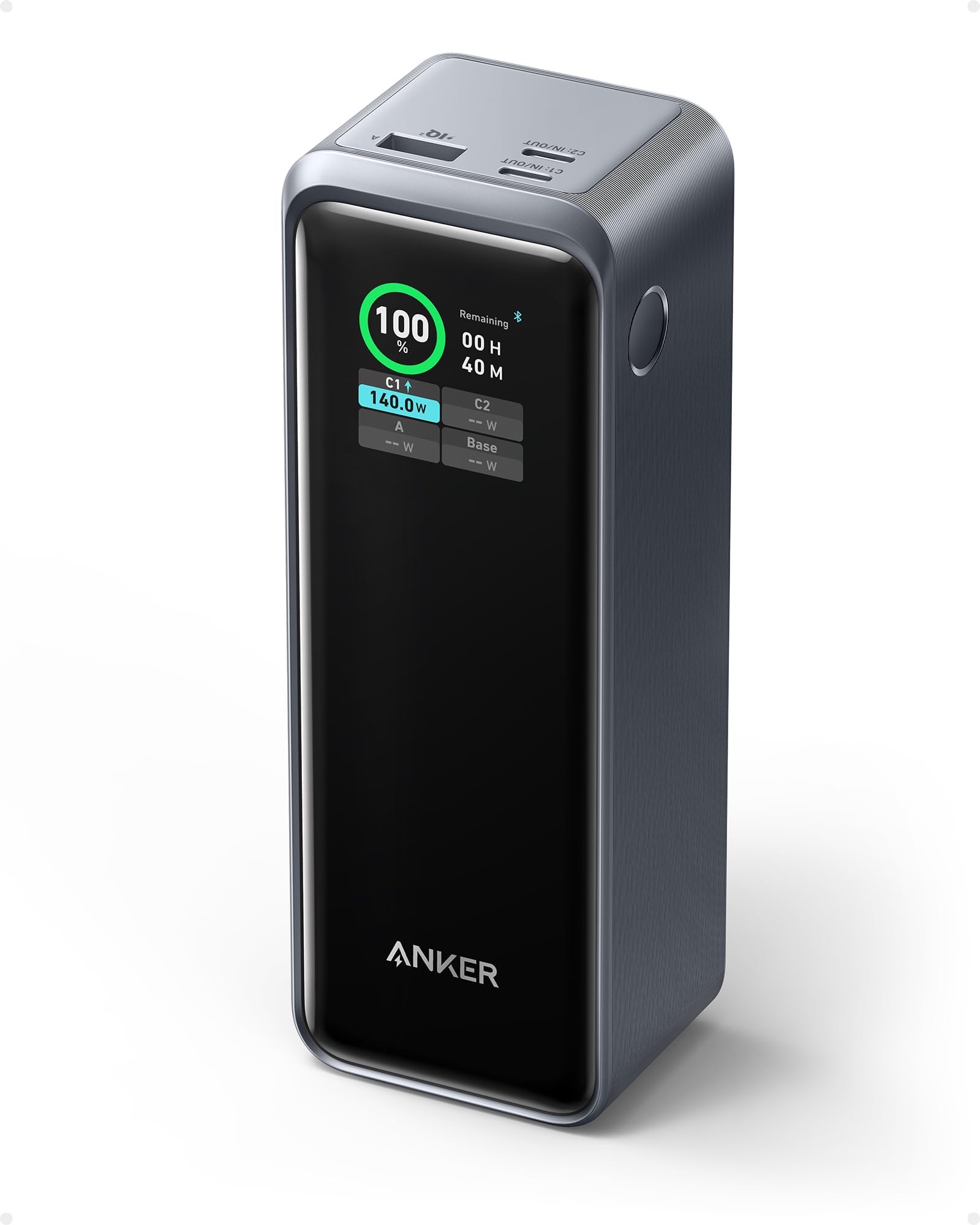
Fig. 01 — Anker Prime Power Bank (27,650mAh, 250W)Margin notes · sourced

The Anker Prime 27,650mAh is the most capable portable charger in its class — 250W of shared output, a 37-minute refill claim, and TSA-friendly capacity that Android Central called the best it tested in three years. The caveats: the Amazon rating drifted on firmware quirks and dead-unit reports, and it's overkill for phone-only charging. For multi-device users, it's the benchmark.

— THE VERDICT · JUDGEANY EDITORS

The Anker Prime Power Bank is what you get when a charging company decides the spec-sheet race is worth winning: 27,650mAh of capacity — 99.54Wh, a hair under the TSA's 100Wh carry-on limit — with 250W of shared output across two USB-C ports (140W each, PD 3.1) and one 65W USB-A port. Anker unveiled it at the end of 2023, and Android Central's Apoorva Bhardwaj, after testing dozens of power banks over three years, called it "the best power bank I've ever used." At launch it cost $149 on Amazon, with a gold-accented variant at $153.

The port math matters more than the 250W headline. The Verge documented the splits: two devices draw up to 140W + 100W from the USB-C ports (or 140W + 65W with USB-A in the mix); with three devices connected it's 140W + 92W + 18W. A video comparison of the Anker 1340 against Ugreen's 145W bank found it could sustain 140W through most of its charge cycle with low wall-to-output losses. Guidantech's reviewer paired it with the 16-inch MacBook Pro — whose own battery is about the same 99.6Wh — and noted one Apple-specific catch: although the bank ships with a 140W-capable USB-C cable, Apple's fastest MagSafe charging only works through Apple's own cable.

The refill side is where this brick embarrasses the competition. Most high-capacity power banks need four or five hours at the wall; Anker claims this one goes from empty to full in as little as 37 minutes with 170W dual-USB-C input. The caveat, reported by The Verge from Anker's own notes: below 55% capacity, a built-in mechanism throttles charging to protect long-term battery health, and 170W input only sustains above that line. A color display shows per-port wattage and time-to-empty, and the Bluetooth companion app adds remote stats, firmware updates, and a find-my beep The Verge singled out as genuinely useful.

The record is where the reviews genuinely disagree, and the split is worth stating. The hardware case still stands: Android Central's verdict, Bhardwaj's finding that it isn't oversized for the capacity — his own 25,000mAh banks were bulkier — and charging numbers that hold up in independent comparisons. But the owner record is messier: retailer mirrors put the Amazon listing at 4.4/5 across about 3,487 ratings, while technoqia's 2026 roundup counted 3,400+ ratings at 3.8, noting that "owners praise the raw power but report firmware quirks and the occasional unit issue." Mirrored Amazon reviews include a bank that failed after four uses and took two days to charge from 29% to 75%, plus display-calibration complaints — a video comparison found the progress readout goes inaccurate in the final charging stages. And The Verge's bottom line is hard to argue with: for phone-only charging, this is "absolutely overkill."

Technoluting's reviewer framed it best, recommending the bank for "pro" users who need power, versatility, and real compatibility across several devices at once — and ruling it out for anyone who wants something light for daily phone top-ups, since this is a 665 g brick, not a pocket accessory. That framing survives the evidence better than any spec sheet. Check the current price on Amazon; the deal history since launch suggests waiting for a sale is the smart move.

Charging performanceThe Verge: 140W+100W two-device, 140W+92W+18W three-device splits · video comparison (Anker 1340 vs Ugreen 145W): sustained 140W through most of the charge cycle, low wall-to-output loss9.5
Capacity & efficiency27,650mAh / 99.54Wh, TSA carry-on compliant · ~1.3x MacBook Air (M2), 4.67x iPhone 14 per Anker9.0
Design & portabilityAndroid Central: seamless front, not bulky vs 25,000mAh rivals · The Verge: chunkier than average, not for pockets · 665 g7.5
App & extrasDisplay shows per-port wattage and time-to-empty · app adds locate-by-sound and firmware updates, works without an account · some features sit behind the app6.5
Value$149 at launch (Android Central, late 2023) · deal lows of $124.99 (The Verge, Jun 2024) and $99.99 (Notebookcheck, Dec 2024) · overkill for phone-only users6.0
JudgeAny Score8.0

The Dossier

Technical file · compiled from specs & reviews
Capacity27,650mAh (99.54Wh) — TSA carry-on compliant
Total output250W shared: 2x USB-C up to 140W each (PD 3.1), 1x USB-A up to 65W
Three-device split140W + 92W + 18W across C1 / C2 / USB-A (per Notebookcheck)
Max input170W dual USB-C (Anker claims 0-100% in as little as 37 min); 100W via pogo-pin dock
Weight665 g / 23.5 oz (per Anker)
Dimensions2.24 x 1.96 x 6.37 in (57 x 49.7 x 161.7 mm)
Display & appColor smart display; Bluetooth app with remote stats, locate-by-sound, firmware updates
ModelA1340 · ASIN B0BYP2F3SG
Launch price$149 (late 2023, per Android Central)

+ WHAT EARNS IT

  • 250W of shared output with two 140W PD 3.1 USB-C ports; holds 140W through most of a charge cycle in independent comparisons
  • 27,650mAh (99.54Wh) slips under the TSA carry-on limit — about 1.3 MacBook Air (M2) charges or 4.67 iPhone 14 charges, per Anker
  • 37-minute refill claim at 170W dual input — far faster than typical high-capacity bricks
  • Color display shows per-port wattage and time-to-empty; the app adds remote stats, locate-by-sound, and firmware updates without requiring an account

− WHAT COSTS IT

  • $149 at launch (late 2023, per Android Central); The Verge called it "absolutely overkill" for phone-only users
  • Amazon rating drifted to 3.8 across 3,400+ ratings (technoqia, 2026) on firmware quirks and dead-unit reports; retailer mirrors show 4.4/5 across ~3,487 ratings
  • Display calibration wobbles near full charge — a video comparison found the progress readout goes inaccurate in the final charging stages
  • 665 g and pocket-hostile; charging throttles below 55% capacity by design

Sources

Every major conclusion above maps to a source here · see our methodology.

Questions, answered

Can I take the Anker Prime Power Bank on a plane?
Yes. At 99.54Wh it sits just under the TSA's 100Wh limit for carry-on lithium batteries, so no airline approval is needed. Keep it in your carry-on, never in checked luggage.
How fast does the power bank itself recharge?
Anker claims as little as 37 minutes with 170W dual-USB-C input. The caveat, reported by The Verge: input only sustains 170W above 55% capacity, and charging throttles below that level to protect battery health.
Do I need the Anker app to use it?
No — owners confirm the power bank works fine without it, and the app doesn't require an Anker account. It adds remote stats, firmware updates, and the locate-by-sound feature — useful, but nothing essential.
Can it charge a laptop, tablet, and phone at once?
Yes, all three ports work simultaneously, but the 250W is shared: with three devices connected, the split is 140W + 92W + 18W across C1, C2, and USB-A, per Notebookcheck's spec rundown.
Is it worth buying if I only charge a phone?
No. Even The Verge — which covered it favorably — called it "absolutely overkill" for phone-only charging. At 665 g and a premium price, it's built for people regularly charging laptops, tablets, and cameras together.
FILED UNDER · BEST POWER BANKS 2026

The one to buy.

The Anker Prime 27,650mAh is the most capable portable charger in its class — 250W of shared output, a 37-minute refill claim, and TSA-friendly capacity that Android Central called the best it tested in three years. The caveats: the Amazon rating drifted on firmware quirks and dead-unit reports, and it's overkill for phone-only charging. For multi-device users, it's the benchmark.

As an Amazon Associate, JudgeAny earns from qualifying purchases. Price and availability are accurate as of the date/time indicated and are subject to change.

Anker Prime Power Bank (27,650mAh, 250W)Anker
Check Price