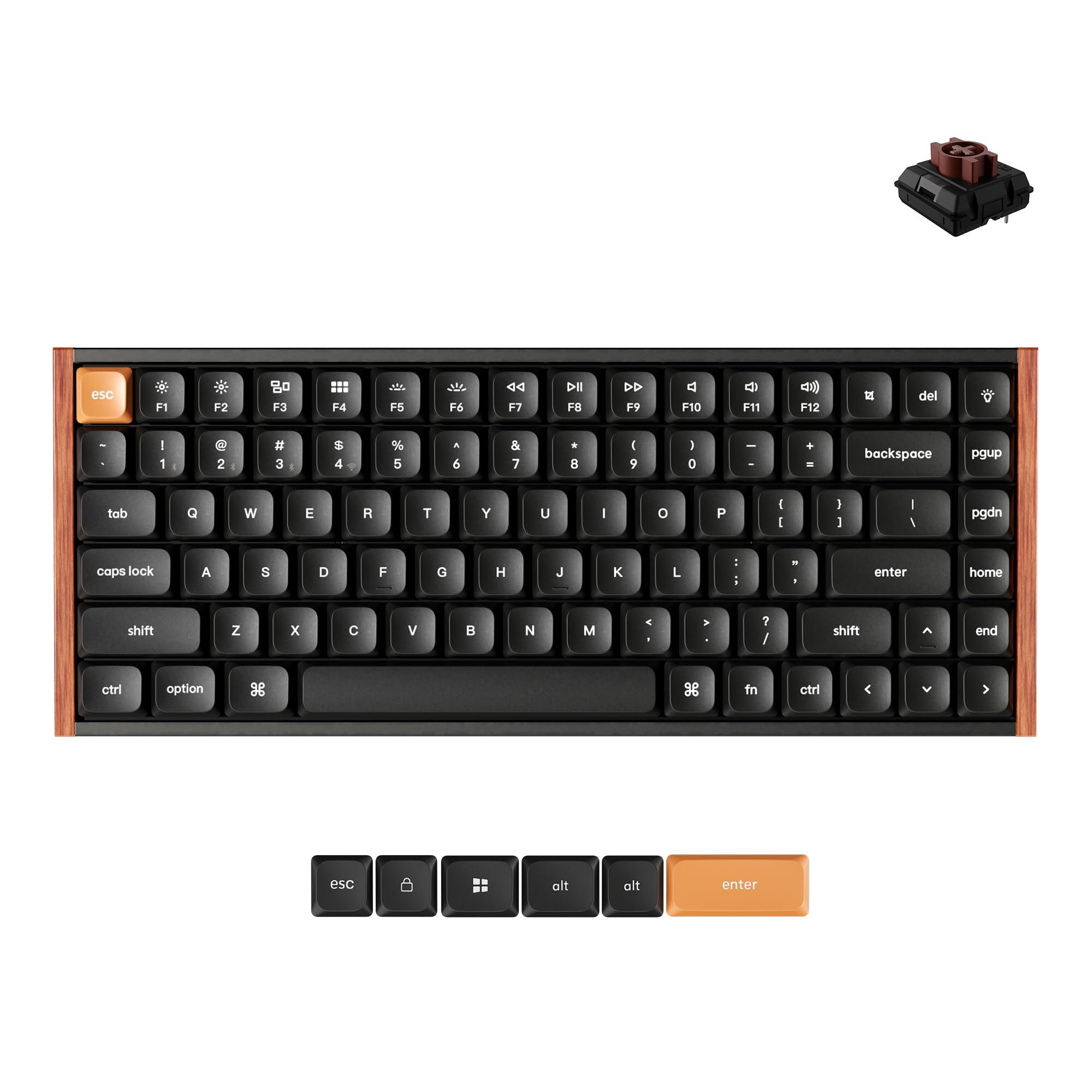
The Keychron K3 Max is the low-profile wireless board to beat near $100: a slim 75% with a quiet, soft typing feel, a 1000 Hz 2.4 GHz link, and full QMK/VIA programmability. The battery falls short of the claim and the stabilizers are a lottery, but as a travel-and-desk typer it earns its place. Check the current price on Amazon.
— THE VERDICT · JUDGEANY EDITORSThe slim 75% that fixed the K3's gaps
The Keychron K3 Max is the low-profile wireless flagship of Keychron's K Max line: a 75%, 84-key board with Gateron low-profile mechanical switches, QMK/VIA programmability, and tri-mode connectivity (2.4 GHz, Bluetooth 5.1, USB-C) with true 1000 Hz polling on the 2.4 GHz and wired links. It arrived in late 2023 at around $94 and remains one of the few low-profile boards with hot-swappable switches. This review is built from published reviews, hands-on impressions, and owner feedback. We don't run a test lab — every measurement below belongs to the outlet that published it, and the score is our editorial judgment based on that public evidence.
Typing feel and sound
Reviewers describe a soft, laptop-adjacent typing experience. Dexerto calls it a soft, gentle experience thanks to the acoustic foam, quiet enough to use on a train, and SemiPro Tech+Gear found the added foam a small but real improvement over the K3 Pro. The switches are 31% slimmer than standard-profile units per Keychron, with shorter travel that laptop converts settle into quickly.
The counterpoint is the stabilizers. SemiPro notes they still need work, and owner reports split by unit: some boards ship with rattle on the Enter key, others arrive clean, which points to unit-to-unit variance rather than a uniform flaw. Stock switch feel also divides owners. One detailed keychron.com owner review says the Brown switches feel closer to linears and recommends swapping to banana switches for real tactility — possible because the RGB-backlit version is hot-swappable.
Latency and connectivity
The radio numbers are strong: 1000 Hz polling on 2.4 GHz and wired, 90 Hz on Bluetooth. SemiPro Tech+Gear used the 2.4 GHz link at about 3.1 ft with desk items in the line of sight and reported a stable connection, no missed presses, and faster wake from sleep than Bluetooth.
Dexerto pushes back: the K3 Max is "not a gaming keyboard, despite the impressive 1000Hz polling rate" — the angled low-profile keys and short travel caused frequent mis-hits in fast games. The board never dropped an input in their testing, but the key feel suits productivity over twitch shooters. That keeps the main conclusion intact: the K3 Max is pitched at portability and typing, where latency is a non-issue, and it works wired over USB-C while charging.
Battery: the small cell is the compromise
Keychron rates the 1550 mAh cell at around 73 hours with the backlight off and around 42 hours with RGB at lowest brightness, both labeled as lab results. Real-world reports land lower: Gear43's reviewer recharged after 5–6 days of use and calls battery life the board's weakest trait. A 2026 three-way comparison at tech-insider.org puts it in perspective — about nine full workdays on the K3 Max versus roughly six weeks from the 4000 mAh NuPhy Air75 V3. It charges over USB-C and stays usable wired while charging, so this is an inconvenience, not a dealbreaker.
Who it's for
Owners consistently praise portability and typing: keychron.com reviewers report using it over a MacBook's built-in keyboard, tossing it in a bag for travel, and pairing it with a PS5 or tablet. Alpha Leaders compares it favorably to the Logitech MX Mechanical Mini and notes the K3 Max's hot-swap advantage. Complaints cluster around battery life, the 90 Hz Bluetooth ceiling, stabilizer variance, no storage for the 2.4 GHz dongle (an owner gripe on Keychron's own page), and the white-backlight version shipping without hot-swap. For the street price, check the current price on Amazon. If you want a thin mechanical typing experience that fits in a laptop sleeve, this is the one to beat; if you want deep key travel or competitive gaming, look elsewhere.