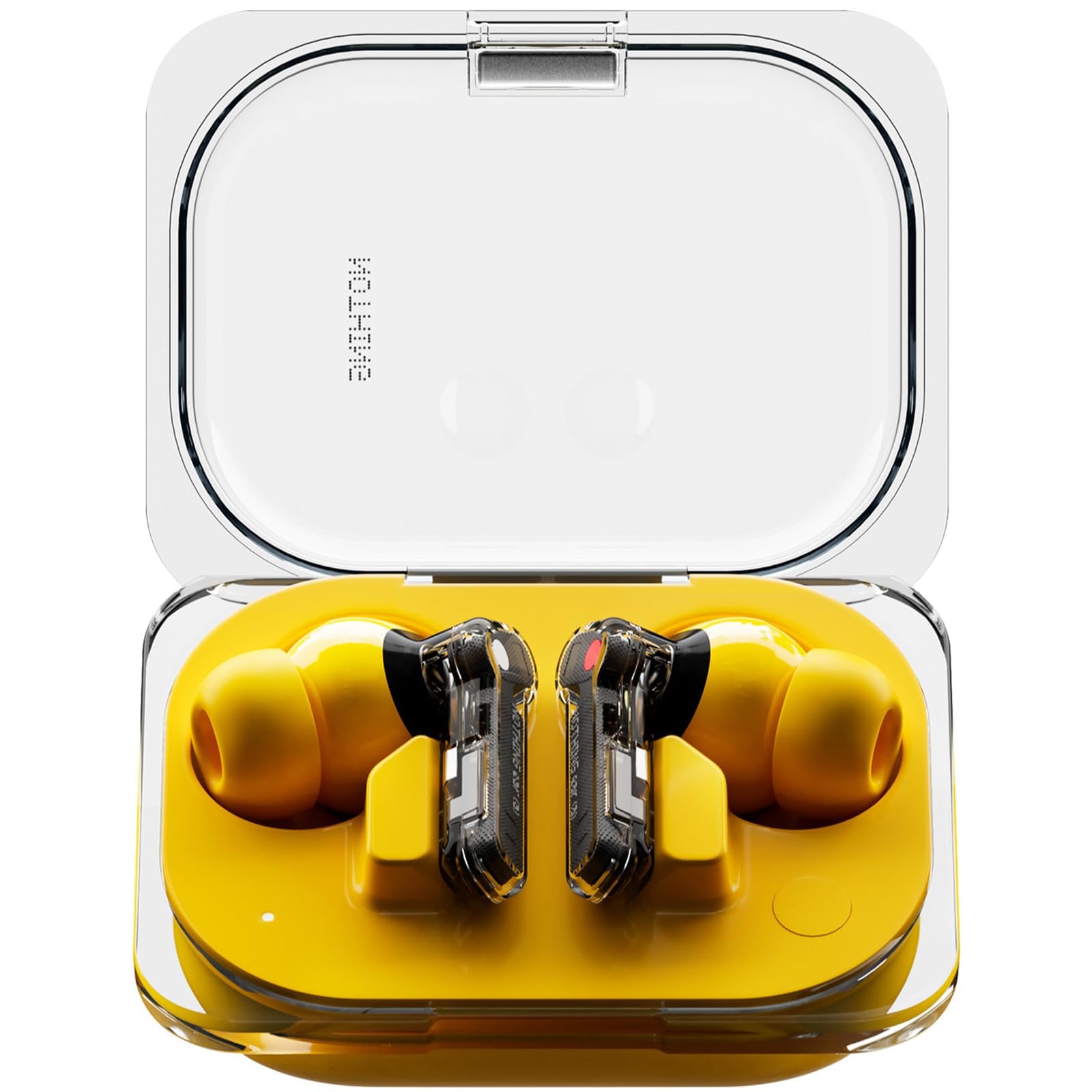
The Nothing Ear (a) is the budget earbud that gets the important things right: strong ANC for the price, LDAC sound that responds well to EQ, and battery life that outlasts rivals. It skips wireless charging and a rugged case. For commuters and Android users under $100, few earbuds deliver this much. Just check the current price on Amazon first.
— THE VERDICT · JUDGEANY EDITORSNothing launched the Ear (a) in April 2024 as the budget sibling of its flagship Ear — the same 45 dB Smart ANC rating, $50 cheaper at list, and a bubble-style case that came in a loud yellow. Two years later it is the rare budget earbud reviewers still reach for. Android Police's Tom Bedford, who tests earbuds for a living, wrote in May 2026 that the Ear (a) is the pair he keeps returning to between reviews, calling them the most stalwart earbuds he has tested. Stuff gave them five stars and called them 'an absolute steal.' This review checks whether that reputation survives a hard look at the measurements — and it mostly does.
Sound: fun first, fixable with EQ
The 11 mm dynamic driver (PMI + custom TPU diaphragm, per Nothing) plays SBC, AAC and LDAC with Hi-Res Wireless Audio certification — an uncommon codec spread at this price. Out of the box the tuning is bass-forward and energetic; Android Police's long-term tester notes a clear slant toward bassy sound that flatters mainstream tracks. The Nothing X app offers four presets (Balanced, More Bass, More Treble, Voice) plus a custom EQ and a five-level Bass Enhance, so the sound is adjustable rather than fixed. One tradeoff Nothing's own support page documents: enabling LDAC disables the EQ, so hi-res listeners hear Nothing's default tuning.
ANC: strong where it counts, honest about the rest
The Smart Hybrid ANC is rated to 45 dB and automatically checks for acoustic leakage, with Low, Mid, High and Adaptive levels. It does its best work on low-frequency rumble — buses, trains, office drones. Higher pitches, like screeching brakes, break through, which the Best Buy Blog's reviewer notes is in line with what these earbuds cost. Scorata's aggregation of 12 professional reviews lands ANC at 3.9/5: broadly praised for the price, not top-tier. Transparency mode is the split opinion — some reviewers find it natural enough for conversations, others still pull a bud out. Scorata scores it 3.3/5.
Battery: the spec sheet holds up
Nothing rates the buds at 9.5 hours with ANC off and 5.5 with it on, stretching to 42.5 and 24.5 hours with the case. Notebookcheck's standardized test — ANC at max, LDAC streaming, a Spotify loop at 65 dB(A) — measured just under 6 hours of continuous playback, slightly beating the 5.5-hour rating. A 10-minute top-up returns up to 10 hours with the case (ANC off). The genuine gap is wireless charging: the Ear (a) is the only 2024 model in Nothing's lineup without Qi, so budget buyers keep a USB-C cable handy.
Calls, controls and comfort
Six mics (three per bud) run Nothing's Clear Voice Technology. The Best Buy Blog's reviewer calls call quality quite good, helped by background-noise suppression; Scorata's aggregation notes some reviewers hear compression and processing in wind. Controls are pinch gestures on the stems rather than touch surfaces, with built-in haptics that make each pinch feel like a real button — a setup reviewers consistently prefer over the accidental taps of touch buds. At 4.8 g per bud with IP54 dust and sweat resistance, comfort is one of the strongest consensus points: Scorata scores long-use comfort 4.5/5 across 12 reviews.
What the lab found — and why the verdict stands
Here is the conflicting evidence. Notebookcheck's standardized audio measurements (firmware 1.0.1.45, LDAC, default tuning) put the Ear (a)'s overall frequency linearity at 31.2% away from median — 90% of the tested class measured better — with bass 20.1% below median. That reads oddly next to reviewers praising deep, punchy bass. The most plausible reading: a measurement rig at default EQ hears a different product than owners do. The Nothing X app's presets and five-level Bass Enhance reshape the low end in seconds, and the subjective consensus — from Stuff's five stars to Android Police's long-term return visits — is built on the tuned experience, not the default curve. The verdict survives, with the caveat a purist should hear: if you want neutral, flat response out of the box, buy something else or budget time for the EQ.
The balanced counterpoint
The Best Buy Blog's review cuts against the hype in the other direction: the Ear (a) are not exceptional earbuds in absolute terms — audiophiles will want finer EQ control, bass lovers more punch — but they are dependable, comfortable and balanced for everyone else. That is really the same conclusion as the five-star reviews, just graded against a different class. Against $250 flagships the Ear (a) is mid-pack; against sub-$100 rivals its package of 45 dB ANC, LDAC and 40-plus-hour total battery is exceptional. In October 2026 Kotaku reported a Prime Day drop to $55 for all three colors — check the current price on Amazon, because street pricing moves and the value math only improves from the $99 list.
Who should buy it
Buy the Ear (a) if you want real ANC and LDAC under $100, commute or work in noisy offices, and do not mind charging over USB-C. Android owners get the most: LDAC is Android-only in practice, and ChatGPT integration requires a Nothing phone. Skip them if you need wireless charging, an IP55 case, elite transparency, or out-of-the-box neutral tuning. Owner data backs the mainstream call: Alza.sk's 172 buyers average 4.7/5, and Amazon's black listing averages 4.3/5 from 5,968 ratings, with comfort and ANC the most repeated praise and the scratch-prone case the most repeated complaint.